Viola High School students are getting the opportunity to think, design, build, test, fail, redesign, and try again as part of the school’s new Introduction to Engineering course.
The new class introduces students to the engineering design process through hands-on challenges that require them to solve problems while working within real-world limitations. Rather than being given instructions for how to build something, students are presented with a problem, criteria that define what a successful solution must accomplish, and constraints that limit the materials, time, or methods they can use.
One of their first challenges sounded simple: build a bridge using only 10 note cards and 12 inches of tape that could span a 12-inch gap.
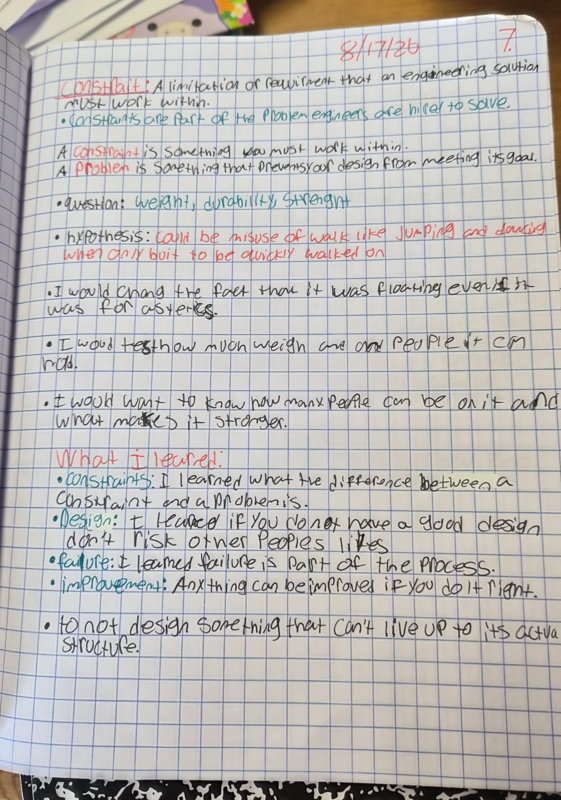
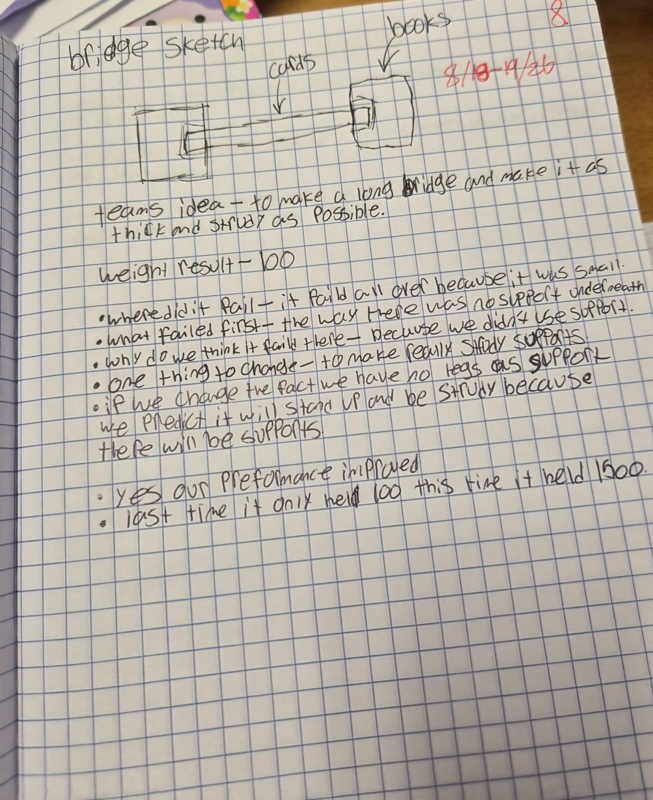
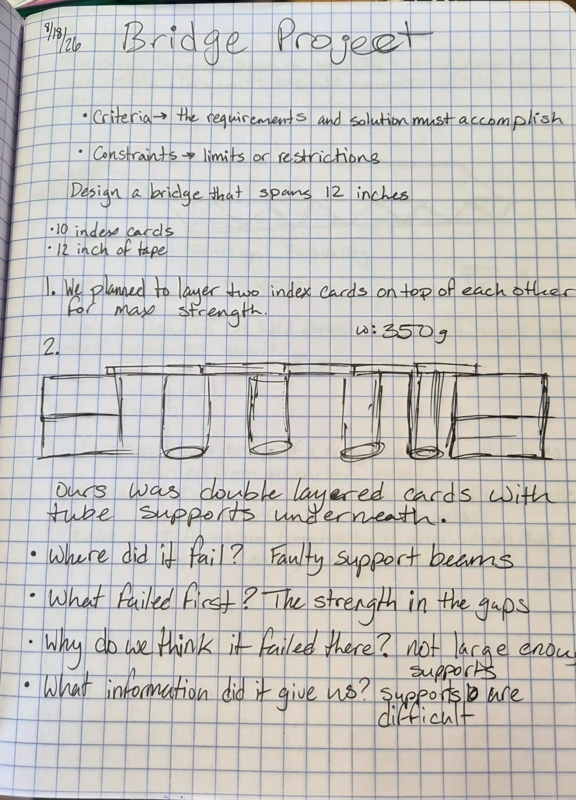
Before construction began, students worked in their engineering notebooks to sketch possible designs, consider how their bridges would carry a load, and plan how to use their limited materials. With only 12 inches of tape available, every connection mattered.
Then came testing.
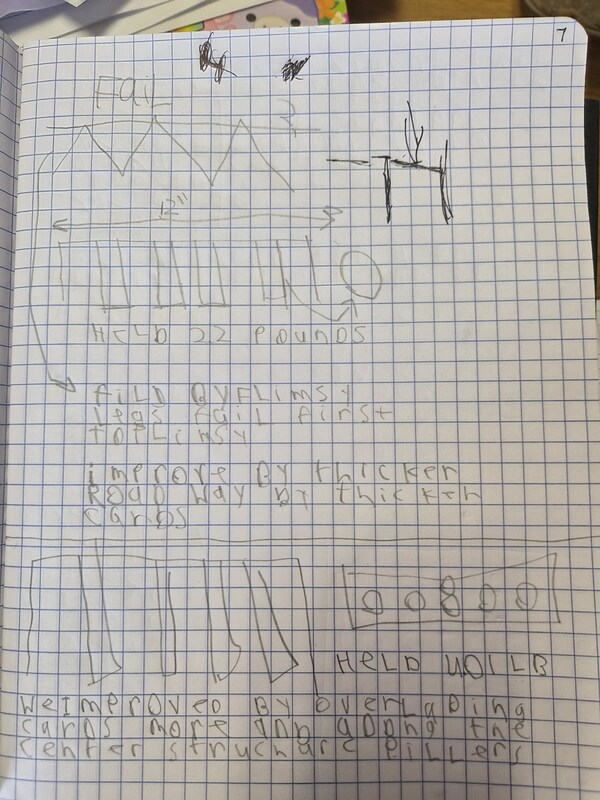
The completed bridges were placed across the 12-inch span and gradually loaded with weight. Some bent. Some twisted. Some failed in unexpected ways. Others held far more weight than their designers expected.
But testing wasn't the end of the challenge.
Students examined what happened to their bridges, identified where and why their designs had failed, and then used what they learned to make improvements before testing again. This cycle of design, build, test, evaluate, and redesign is called iteration, and it is a fundamental part of engineering.
Each round of testing gave students new information. A failure showed where a design needed improvement, while a successful test raised a new question: How much more can it hold?
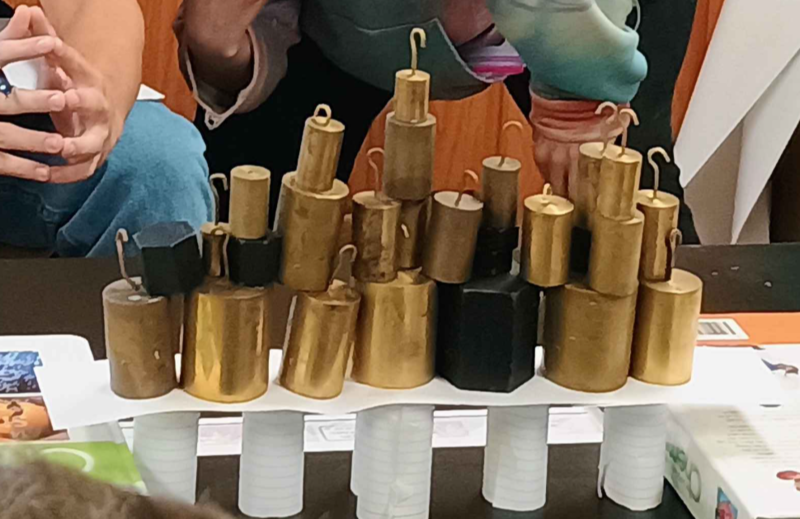
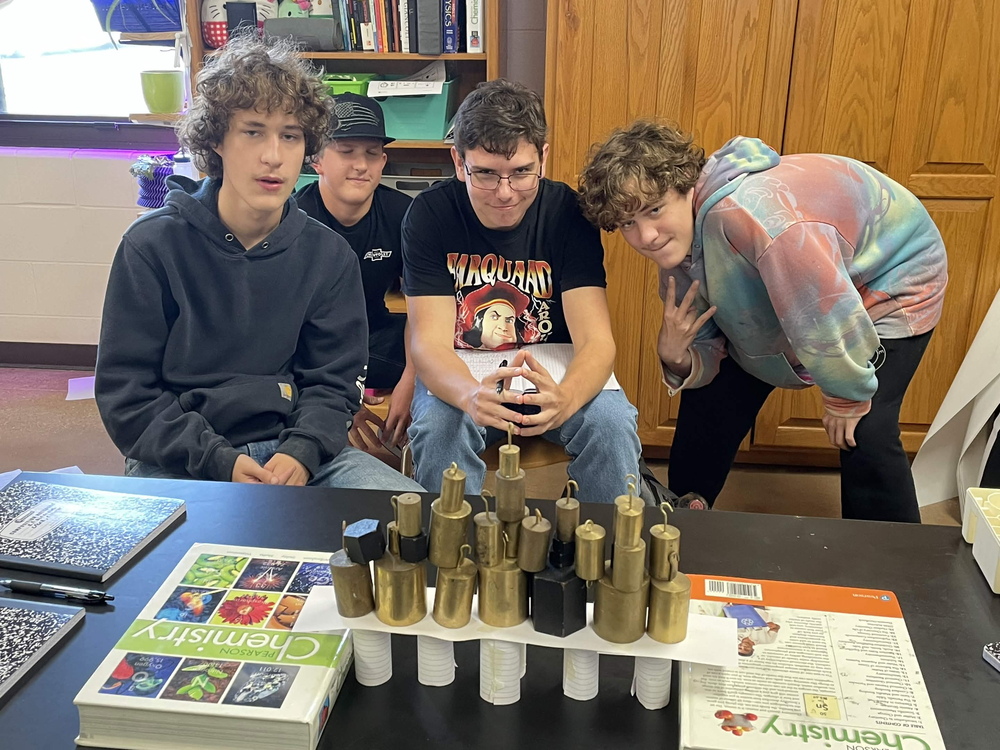
For the bridge pictured below, the class never got an answer.
The winning design continued to hold as more and more weight was added. Eventually, the test had to end—not because the bridge failed, but because we ran out of weights to put on it. Its actual maximum load remains unknown.
The bridge challenge is just one of the problems students will tackle in Introduction to Engineering this year. Along the way, they will continue documenting their work in engineering notebooks, testing their ideas, and learning how to use the results of one attempt to inform the next.
For now, though, we may need to find some heavier weights.